
The heart is one of the most essential organs in the body, and even the smallest irregularity can impact your overall health. That is why doctors rely heavily on a simple but powerful test known as the Eletrocardiograma. Understanding why doctors recommend eletrocardiograma can help you detect symptoms earlier, prevent serious issues, and confidently manage your heart health.
Whether you’re experiencing symptoms, checking your heart proactively, or your doctor advised the test during a routine exam, this detailed guide explains exactly when and why an Eletrocardiograma is needed. If you are new to ECG testing, you may want to start with this beginner-friendly guide here: Eletrocardiograma Test – Complete Guide.
What Is an Eletrocardiograma?
An Eletrocardiograma (ECG or EKG) is a non-invasive test that records the heart’s electrical activity. Each heartbeat produces electrical impulses, and these impulses travel through the heart in a specific pattern. The Eletrocardiograma captures these signals through electrodes placed on the skin and prints them as waveforms.
The simplicity of the test is part of the reason why doctors recommend eletrocardiograma so often: it is safe, painless, fast, and provides immediate diagnostic information. Doctors use it during regular checkups, emergency visits, and as part of ongoing monitoring for patients with heart conditions.
What Does an Eletrocardiograma Show?
The test reveals essential details about heart function, such as:
- Heart rate (beats per minute)
- Heart rhythm (regular or irregular)
- Electrical conduction patterns
- Signs of previous heart damage
- Possible blockages in blood flow
- Thickening of the heart muscle
- Electrolyte imbalance affecting the heartbeat
This wide range of diagnostic ability explains why doctors recommend eletrocardiograma not only when symptoms appear but also for routine health evaluations.
Top Reasons Why Doctors Recommend an Eletrocardiograma
There are several medical situations where doctors rely on the test to quickly identify issues. Here are the most common reasons.
1. Chest Pain or Discomfort
If a patient experiences chest pain, doctors almost always order an Eletrocardiograma first. This is because chest pain can indicate:
- Heart attack
- Reduced blood flow to the heart
- Abnormal heart rhythms
- Muscle strain or non-cardiac issues
The test helps differentiate dangerous symptoms from less serious causes within minutes.
2. Irregular Heartbeat or Palpitations
Patients who feel their heart racing, beating too slowly, or skipping beats require immediate evaluation. This is another key reason why doctors recommend eletrocardiograma. The test can detect arrhythmias, such as:
- Atrial fibrillation
- Tachycardia
- Bradycardia
- Premature beats
Some arrhythmias are harmless, while others are life-threatening. The ECG helps identify which is which.
3. Shortness of Breath
Unexpected difficulty breathing can be related to heart failure, fluid buildup, or cardiac strain. The ECG offers immediate clues, especially when combined with an echocardiogram or blood tests.
4. Dizziness or Fainting
A sudden loss of consciousness or persistent dizziness can be linked to abnormal electrical activity in the heart. Detecting these issues early is vital, and that’s exactly why doctors recommend eletrocardiograma in such cases.
5. High Blood Pressure
Long-term hypertension can slowly damage the heart muscle. An ECG helps detect:
- Left ventricular hypertrophy
- Abnormal strain patterns
- Signs of reduced blood flow
Regular ECGs can prevent major complications.
6. Monitoring Heart Conditions Over Time
Patients with a history of heart disease require continuous evaluation. The ECG is used to:
- Track recovery after a heart attack
- Monitor pacemaker function
- Assess treatment or medication response
- Detect progression of known conditions
This makes the Eletrocardiograma a routine tool in long-term cardiac care.
7. Screening Before Surgery
Doctors often require an ECG before major surgeries to ensure the heart is strong enough for anesthesia. The test checks for hidden problems that could complicate the operation.
8. Routine Preventive Checkups
Even without symptoms, many adults—especially those over 40—benefit from periodic ECG screening. This helps detect early warning signs long before symptoms appear.
How Doctors Perform an Eletrocardiograma
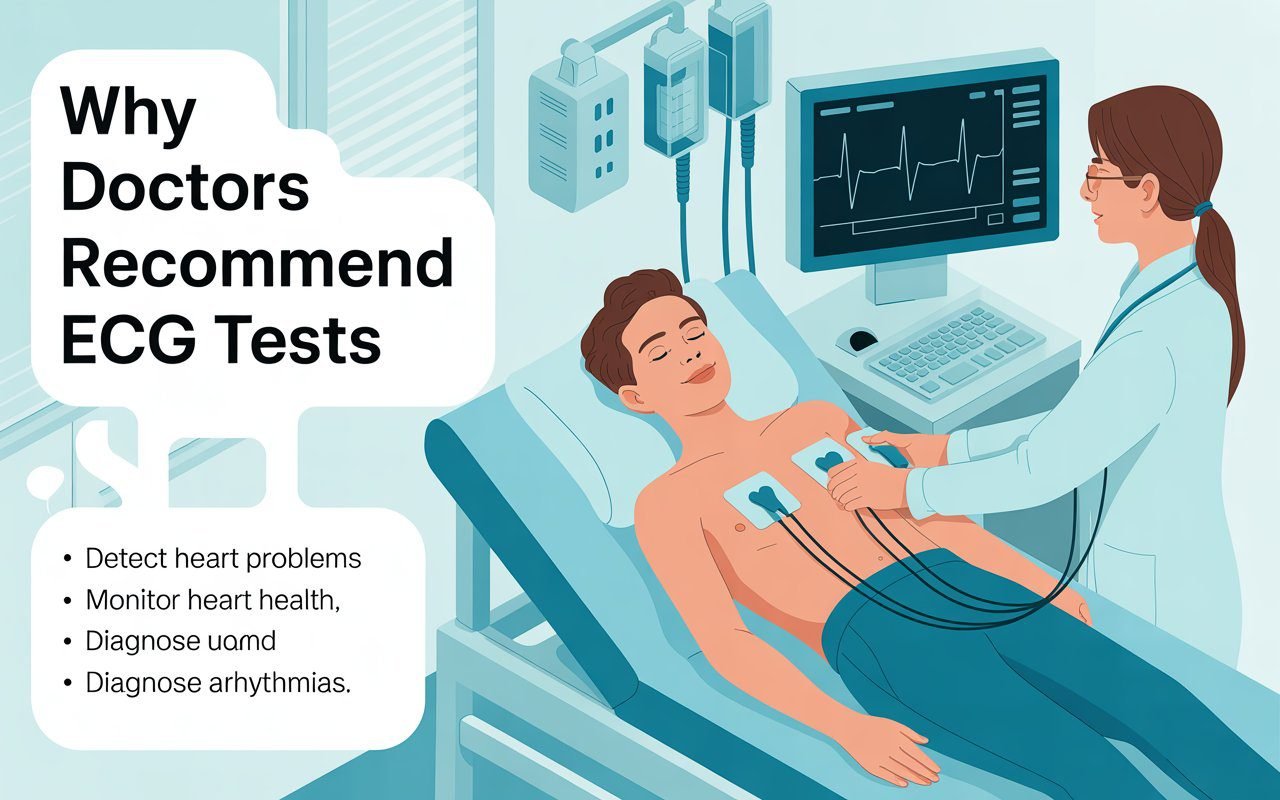
The procedure is simple, safe, and completed in a few minutes. A technician places small adhesive electrodes on your chest, arms, and legs. You lie down quietly while the machine records the electrical activity.
The process is painless, and no electricity enters the body. This simplicity is one of the top reasons why doctors recommend eletrocardiograma so frequently—it provides immediate insights with virtually zero risk.
If you want to prepare properly before taking the test, check this helpful guide:
How to Prepare for an Eletrocardiograma.
What Doctors Look for in the Results
After the test, doctors evaluate several key components:
- P wave: Atrial electrical activity
- QRS complex: Ventricular contraction
- T wave: Recovery phase of the heartbeat
- Intervals and segments: Timing of each phase
Doctors compare your ECG to a normal pattern and check for abnormalities that indicate:
- Heart attack (past or current)
- Ischemia (reduced blood flow)
- Arrhythmias
- Heart muscle enlargement
- Conduction problems
These details make the ECG a powerful early detection tool.
Who Should Consider Taking an Eletrocardiograma?
Doctors recommend ECG tests for several groups of people:
- Anyone experiencing chest pain or pressure
- People with a family history of heart disease
- Adults over 40 during routine checkups
- Smokers, diabetics, or individuals with high cholesterol
- Athletes undergoing fitness evaluations
- Patients on long-term medication affecting the heart
- Those recovering from surgery or heart procedures
To know exactly whether you need the test, read this guide:
Who Should Get an Eletrocardiograma?
How Safe Is the Eletrocardiograma?
The test is extremely safe. No radiation, needles, or discomfort are involved. This is another reason why doctors recommend eletrocardiograma without hesitation. The electrodes only record electrical activity; they do not send any electricity into the body.
For medical accuracy, here is a trusted source you can review:
MedlinePlus – Electrocardiogram.
You may also compare clinical information from this resource:
Cleveland Clinic – ECG Overview.
Frequently Asked Questions
Is an Eletrocardiograma always necessary?
No, but it is often recommended when symptoms suggest a heart problem or when patients have risk factors.
Why do doctors recommend an ECG even if I feel healthy?
Because the test can detect silent or early-stage heart issues before symptoms appear.
Does the ECG replace other heart tests?
No. It works together with tests like echocardiograms and blood work for a complete diagnosis.
How often should I get an ECG?
Most adults benefit from one every 1–2 years, depending on age and risk factors.
Can the ECG detect all heart issues?
Not all, but it excels at detecting electrical problems, arrhythmias, and signs of heart attack.
Final Thoughts
Understanding why doctors recommend eletrocardiograma helps you take control of your heart health. The test is simple, safe, affordable, and incredibly informative. Whether you’re experiencing symptoms or simply checking your health proactively, an Eletrocardiograma provides valuable insights that help detect problems early and prevent serious complications.
If you have concerns about your heart or experience unusual symptoms, it’s always wise to speak with your doctor. Early testing can save lives—and your heart deserves that level of care.