
The types of Eletrocardiograma tests used today help doctors evaluate the heart in many different conditions—while resting, during exercise, and throughout daily activities. Each type of Eletrocardiograma test captures unique information about the heart’s electrical activity, helping diagnose rhythm problems, ischemia, and other heart conditions. This guide explains the three most common types: Resting ECG, Stress ECG, and Holter Monitoring, using simple and clear language.
If you are new to ECG testing, start with our beginner overview: Eletrocardiograma Test – Complete Guide.
Why Different Types of Eletrocardiograma Tests Exist
One single Eletrocardiograma cannot capture every possible heart condition. Some abnormalities only appear when the heart is resting. Others appear only when the heart is under physical stress. Some problems are so occasional that they may not show up during a short clinic visit.
That is why cardiologists use different types of Eletrocardiograma tests depending on symptoms, risk factors, and the patient’s medical history.
Before exploring each type, it may also help to understand how an Eletrocardiograma works, including how waves, intervals, and electrical signals are recorded.
1. Resting Eletrocardiograma (ECG)
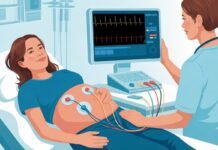
The Resting Eletrocardiograma is the simplest and most widely used type of EKG test. It is performed while the patient lies still and relaxed. This test gives an instant snapshot of the heart’s electrical activity and can detect many common problems.
How the Test Is Performed
The procedure usually takes less than ten minutes. Electrodes are placed on the chest, arms, and legs. The patient is asked to breathe normally and remain still while the machine records waveforms.
What Resting ECG Reveals
- Heart rhythm (regular or irregular)
- Heart rate abnormalities
- Signs of previous or recent heart attack
- Conduction blocks or delays
- Enlargement or thickening of heart chambers
- Electrolyte imbalances (e.g., potassium issues)
Doctors often use the resting test as the first step before deciding whether more advanced types of Eletrocardiograma tests are needed.
2. Stress Eletrocardiograma (Exercise ECG)
The Stress Eletrocardiograma evaluates how the heart responds to physical activity. Some symptoms—especially those related to blocked arteries—only appear when the heart is working harder.
How the Stress Test Works
This test is performed while the patient walks or runs on a treadmill or pedals a stationary bike. Electrodes are attached to the chest, and heart rhythm is monitored continuously as exercise intensity increases.
What Stress ECG Can Detect
- Reduced blood flow to the heart muscle (ischemia)
- Exercise-induced arrhythmias
- Symptoms triggered by exertion
- Heart rate response and recovery pattern
If the stress test shows abnormalities, doctors may recommend imaging stress tests or more advanced cardiac evaluations.
3. Holter Monitor (24–48 Hour Eletrocardiograma)
Some heart rhythm problems do not happen all the time. They may occur randomly during sleep, stress, or daily activities. This is where the Holter Eletrocardiograma becomes useful.
A Holter monitor is a small portable device worn for 24 or 48 hours (sometimes longer). It continuously records every heartbeat, giving a detailed picture of electrical patterns over an entire day.
For a dedicated guide, visit: Holter Eletrocardiograma Monitor.
How the Holter Test Works
- Electrodes are placed on the chest and connected to a small recorder.
- Patients go home and carry on with normal activities.
- They may press a button when they feel symptoms.
- After monitoring, the device is returned to the clinic for analysis.
What Holter Monitoring Detects
- Occasional arrhythmias
- Night-time irregularities
- Symptoms such as dizziness or palpitations
- Heart rate variability patterns
- Effects of medications
Other Specialized Eletrocardiograma Tests
Besides the main types of Eletrocardiograma tests, doctors may use additional variations depending on symptoms and diagnostic needs.
Event Monitor
A longer-term device worn for several weeks. It records only when triggered by the patient or by automatic detection of irregular heart rhythms.
Signal-Averaged ECG
A specialized test that detects very subtle electrical abnormalities not visible in a standard ECG.
Telemetry Monitoring
Used in hospitals to continuously track heart rhythm in real-time, usually for patients recovering from surgery or heart attacks.
When Doctors Choose Each Type
Different types of Eletrocardiograma tests are chosen based on:
- Symptoms (chest pain, palpitations, dizziness)
- Exercise-related issues
- Frequency of symptoms
- Risk factors such as high blood pressure or diabetes
- Family history of cardiac problems
For example:
- A resting ECG is used for general evaluation.
- A stress ECG is chosen if symptoms appear during activity.
- A Holter monitor is recommended if symptoms come and go unpredictably.
External Resources for Further Reading
For more clinical insight, the Cleveland Clinic ECG overview provides detailed medical explanations.
Patients may also find the Healthline ECG guide helpful for simple explanations.
Final Thoughts
Understanding the main types of Eletrocardiograma tests helps you recognise why doctors choose one method over another. Each type offers a different view of the heart’s electrical behaviour—at rest, during activity, or over a full day.