

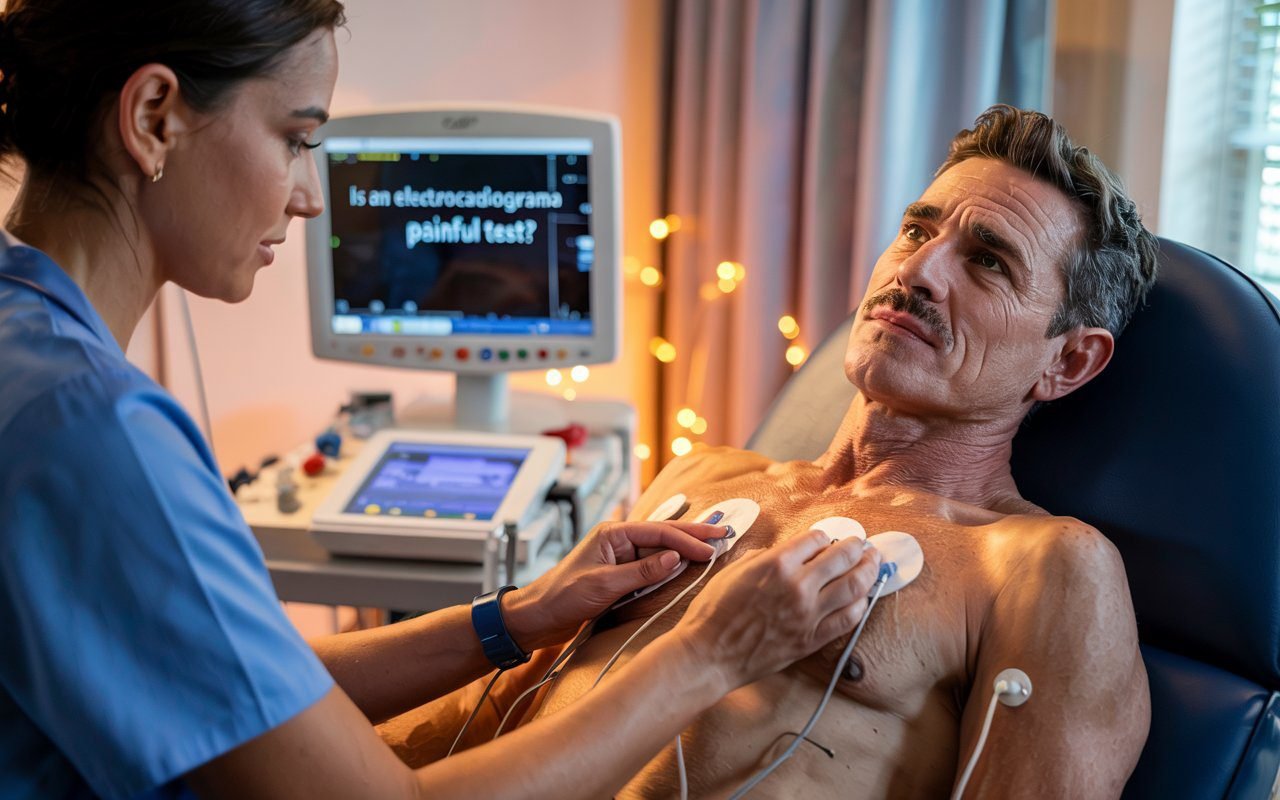
One of the most common questions people ask before taking their first heart test is, “Is an Eletrocardiograma painful?” It’s normal to feel nervous, especially when the test sounds technical or when you’re unsure about what will happen during the procedure. The truth is simple: an Eletrocardiograma (ECG or EKG) is completely safe, entirely painless, and one of the most comfortable diagnostic tests in modern medicine.
This guide explains what you will feel during the test, why the ECG is painless, and clears up common myths that cause fear or confusion. You will also find preparation tips, safety information, patient experiences, and links to deeper guides about the Eletrocardiograma.
If you are starting your learning journey, you can also read our beginner-friendly full guide here: Eletrocardiograma Test – Complete Guide.
What Is an Eletrocardiograma?
An Eletrocardiograma is a quick, simple test that measures the electrical activity of your heart. Every time your heart beats, tiny electrical signals move through its chambers. These signals are detected through small sensors called electrodes, which are placed on your chest, arms, and legs.
The ECG machine translates these signals into waves on a graph. Doctors analyze these waves to check how your heart is functioning, whether your heartbeat is regular, and whether there are signs of conditions such as arrhythmia, blocked arteries, or previous heart injury.
This makes the Eletrocardiograma one of the most widely used, high-value tests in heart health care.
Is an Eletrocardiograma Painful?
No — an Eletrocardiograma is not painful. It does not involve needles, injections, or electricity entering your body. The electrodes placed on your skin only receive the natural signals produced by your heart. Nothing is transmitted into your system.
Most patients describe the test as extremely easy and comfortable. The only sensations you may notice are:
-
- A cool feeling when the technician cleans your skin
- Mild coldness from the gel on the electrodes
- A very light pulling sensation when the pads are removed
None of these sensations are painful, and the entire test usually takes less than 10 minutes.
Why Do People Think the Eletrocardiograma Might Hurt?
People often become nervous because of misconceptions. Let’s break down the most common myths.
Myth 1: “The electrodes send electricity into your body.”
This is completely false. The electrodes only read electrical signals; they do not send any current.
Myth 2: “The machine looks complicated, so the test must be painful.”
The machine may look technical, but it performs a very gentle function — recording your natural heart rhythm.
Myth 3: “Removing the patches hurts.”
Most people barely feel anything. If you have chest hair, the technician may trim a small area, which avoids pulling and makes the process painless.
Myth 4: “Medical tests are usually uncomfortable.”
Unlike blood tests or injections, an ECG requires no penetration of the skin. It is one of the least intrusive medical procedures.
What Does the Test Actually Feel Like?
The Eletrocardiograma is so gentle that many patients say it feels like “lying down for a few minutes while stickers are placed on your skin.” You don’t have to hold your breath, change your breathing rhythm, or remain tense. You simply relax while the machine does all the work.
Here’s what you might notice during the test:
- You feel calm and still
- There is no sound or vibration from the machine
- No part of the process causes pain
- You stay fully conscious and comfortable
How the Eletrocardiograma Works (Step-by-Step)
Understanding how the test works can reduce anxiety. For a deep technical explanation, read our article here: How an Eletrocardiograma Works.
Here is the simple step-by-step experience during a standard ECG:
- You lie down on an examination table.
- The technician may clean your chest area and limbs.
- Small electrodes are attached to your skin.
- Wires connect the electrodes to the ECG machine.
- You remain still while the machine records your heartbeat.
- The technician removes the electrodes after recording.
The entire procedure is fast, quiet, and painless. Most people are surprised by how easy it feels.
Why the Eletrocardiograma Is Completely Safe
The Eletrocardiograma is one of the safest tests in modern healthcare. It requires no radiation, no magnetic fields, and no electronic stimulation. It simply measures the heart’s natural rhythms.
For an authoritative medical explanation, see:
MedlinePlus – Electrocardiogram (ECG)
You can also compare with another medical resource:
Cleveland Clinic – EKG Overview
Who Should Take an Eletrocardiograma?
You may need an ECG if you experience any of the following symptoms:
- Chest pain or discomfort
- Shortness of breath
- Fatigue during mild activity
- Irregular or fast heartbeat
- Lightheadedness or fainting
- High blood pressure or high cholesterol
- A family history of heart disease
Does Anxiety Make the Test Feel Painful?
Anxiety can make people expect discomfort, even when none exists. If you feel worried, try these tips:
- Take slow, deep breaths
- Ask the technician to explain each step
- Focus on relaxing your shoulders and chest
Knowing what to expect often removes 90% of the fear.
How to Prepare for the Test
Proper preparation makes the test smoother and helps ensure accurate results. You can find a full checklist here:
How to Prepare for an Eletrocardiograma
Basic preparation tips include:
- Avoid lotions or oils on your chest
- Wear loose clothing
- Relax and breathe normally
- Follow your doctor’s instructions
Frequently Asked Questions
Is an Eletrocardiograma painful?
No. The test does not send electricity into your body and causes zero pain.
How long does the Eletrocardiograma take?
The full procedure takes about 5–10 minutes, and the recording itself only seconds.
Does electrode removal hurt?
For most people, electrode removal is painless. A small tug may be felt, but it is brief and mild.
Is the test safe for children and seniors?
Yes. The Eletrocardiograma is completely safe for all ages.
Can I eat before the test?
Yes. Eating normally is allowed unless your doctor tells you otherwise.
Final Thoughts
The Eletrocardiograma is a simple, painless, and highly effective test for evaluating heart health. Understanding the process removes fear and helps you approach the test with confidence. Whether you are experiencing symptoms or completing a routine checkup, an ECG provides valuable insights into your heart’s function.
If you experience symptoms like chest discomfort, dizziness, or irregular heartbeat, don’t ignore them. Early diagnosis through an Eletrocardiograma can make a significant difference in your long-term heart health.