
The idea behind Holter monitoring is simple. The heart does not behave the same way every minute. It speeds up during walking, slows during rest, reacts to emotion, and sometimes produces irregular beats only at night or early morning. A Holter captures these hidden episodes. It shows what a standard eletrocardiograma cannot. For people who feel palpitations occasionally or experience dizziness without a clear pattern, the Holter removes uncertainty. It turns a mystery into measurable data.
What is a Holter Eletrocardiograma Monitor in Real Terms?
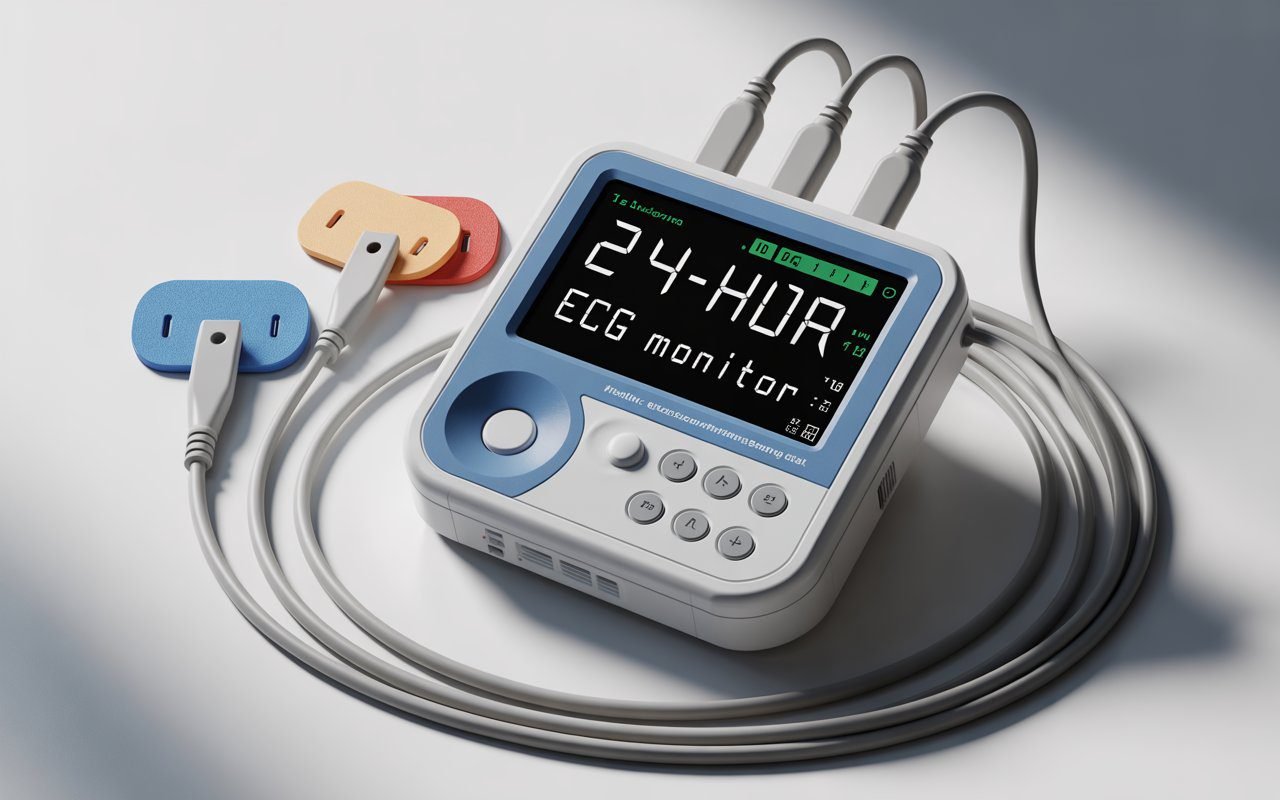
The Holter monitor is a portable ECG device attached to the chest using electrodes. It records every heartbeat across one full day. Some models record for 48 hours or even 7 days. The patient goes home, works, sleeps, drives, and follows normal routines. The goal is to see the heart in real life, not just inside a clinic.
Where standard ECG offers a snapshot, Holter offers a full story. A doctor can see when the heart skips a beat, how often rhythm changes, and whether electrical conduction becomes unstable. This makes the Holter Eletrocardiograma Monitor one of the most accurate tools for diagnosing arrhythmia. For comparison of ECG methods you can read ECG tests.
Why 24-Hour Continuous Monitoring Matters
The human heart is dynamic. It reacts to meals, tension, temperature, physical activity, and sleep cycles. Many heart irregularities do not occur consistently. A person may feel “something wrong” only once each day, or even once a week. A short clinic exam might miss it. A Holter captures what happens in-between appointments.
Daily rhythm variation includes:
- Heart rate spikes during walking or stress
- Nighttime slow rhythm during deep sleep
- Premature beats during anxiety or caffeine intake
- Arrhythmia that comes and goes without pattern
When doctors ask for Holter monitoring, they are trying to catch the irregularity during life rather than hope it appears during a 30-second clinic ECG. This gives the patient a more precise diagnosis and a safer treatment plan.
Who Should Consider Holter Monitoring?
A Holter Eletrocardiograma is not only for serious cardiac patients. It is recommended for anyone who has unexplained heart sensations that do not appear during a normal ECG exam. These symptoms include:
- Random palpitations or skipped beats
- Sudden chest discomfort without pain
- Fainting or near-fainting episodes
- Shortness of breath unrelated to exercise level
- Rapid heart rate at night or early morning
- Irregular heartbeat that comes and goes
It is also helpful after a heart attack, during medication adjustment, or when assessing pacemaker performance. Patients with suspected arrhythmia often benefit most from this test. For a focused look at rhythm disorders you may check ECG arrhythmia.
How the Holter Monitor is Applied Step by Step
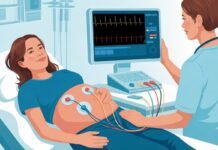
The procedure is not painful and requires no hospital stay. You arrive at the clinic. A technician cleans small areas on your chest. Electrodes are attached gently with adhesive. These wires connect to a small recorder worn like a belt or a shoulder strap. You return home and live normally while the device records silently.
The most important instruction is simple. Continue your routine. Eat normally. Walk normally. Sleep normally. The Holter works best when heart activity is natural. Some patients try to “act carefully,” but exaggerated caution gives less accurate results. Doctors need real-life patterns, not controlled behavior.
How to Prepare for Holter Monitoring
Preparation is simple and low-stress. You do not need to fast. You should shower beforehand because bathing during the monitoring period may not be allowed. Avoid heavy cream or oil on the skin because it weakens electrode contact. Skin should be dry and clean when the electrodes are applied.
You may be asked to keep a diary. This journal records activities, symptoms, or emotional states while wearing the monitor. When the doctor compares the diary with the ECG recording, patterns become clearer. If palpitations appear during a stressful moment at work or after coffee intake, the device will confirm the timing.
What Doctors Learn from Holter Results
Once the monitoring period finishes, the device is returned to the clinic. A cardiologist analyzes thousands of heartbeats. Computers highlight irregular segments, but human interpretation remains essential. The Holter report reveals heart rate range, average beats per minute, arrhythmia frequency, and conduction abnormalities. It notes when variations happened and what rhythm pattern followed.
Holter monitors are especially effective in detecting:
- Atrial fibrillation
- Extra systoles (premature beats)
- Tachycardia and bradycardia
- Heart block conduction delays
- Unstable rhythm under stress or sleep
Not all arrhythmias require treatment. Some are harmless. Others demand intervention. The Holter does not guess. It provides evidence.
Holter vs Portable ECG: Which One is Better?
Portable ECG devices allow quick home readings. Holter monitors record continuously for 24 hours or longer. Handheld monitors are convenient but may miss irregularities that occur only at night or during certain situations. The Holter captures everything while portable ECG captures moments.
For a full comparison of portable monitoring you may read portable ECG.
When Holter Results Require Further Testing
If the Holter shows significant arrhythmia or signs of conduction delay, further evaluation may be needed. Echocardiogram, stress ECG, or longer monitoring with event recorders may follow. Some arrhythmias are benign. Others suggest electrical instability that needs medication, ablation, or device therapy.
Holter monitoring is one layer of assessment. It does not diagnose structural disease alone. It must be paired with clinical context, patient history, and follow-up testing when needed.
Reliable Medical Sources
For detailed arrhythmia review, you may read the AHA arrhythmia page. For research-grade Holter evaluation accuracy, the NCBI Holter publication explains clinical advantages and limitations.
Conclusion
The Holter Eletrocardiograma Monitor bridges the gap between quick clinic testing and real-life heart behavior. It helps detect rhythm changes that appear only occasionally, and it gives doctors data backed by time, movement, sleep, and stress. The test is non-invasive, easy to wear, and one of the most valuable tools for arrhythmia investigation. Portable ECG and standard eletrocardiograma have their place, but Holter monitoring offers duration and depth when time matters most. If symptoms come and go unpredictably, a Holter may be the test that finally provides answers.