

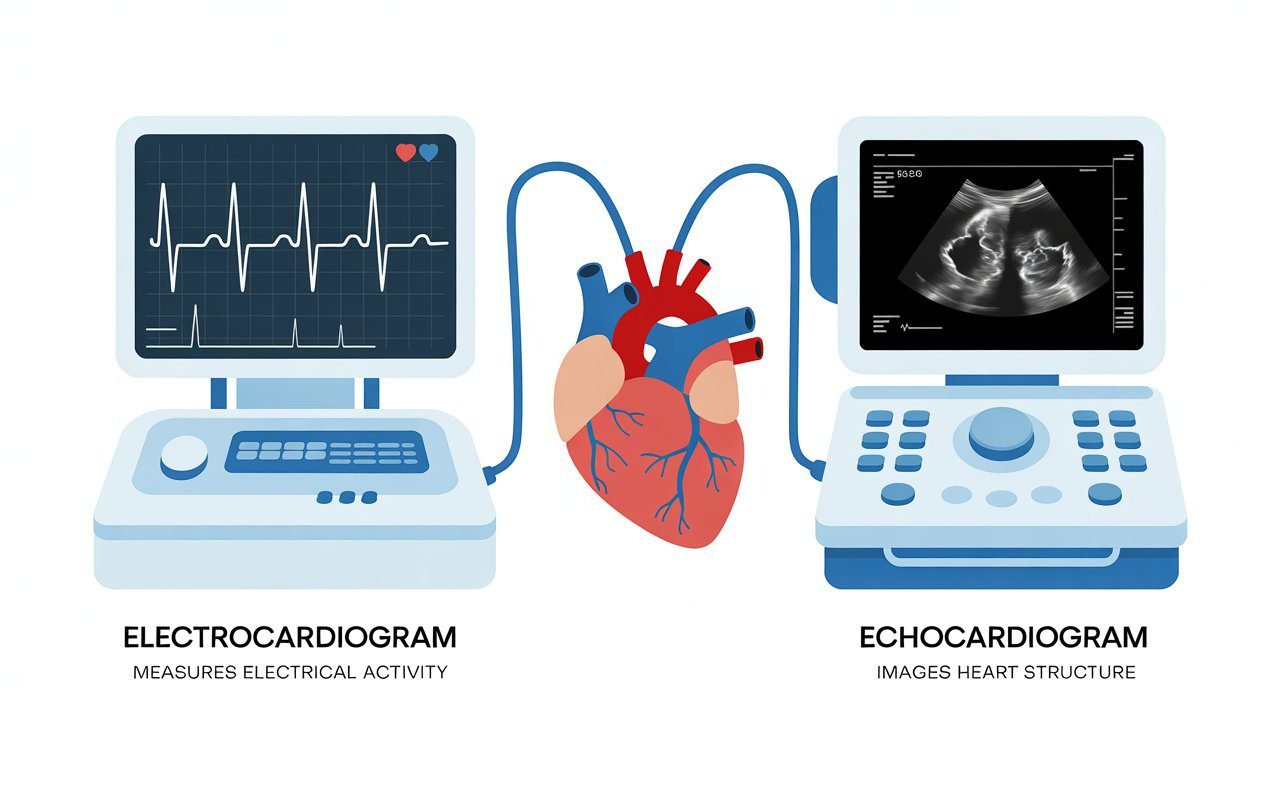
When it comes to heart tests, two procedures often cause confusion: the Eletrocardiograma and the Echocardiogram. Although their names sound similar, they are completely different tests, used for different purposes, and recommended for different types of heart concerns. If you’ve ever wondered about eletrocardiograma vs echocardiogram, this guide breaks down everything you need to know in a simple, human-friendly way.
Understanding the difference helps you prepare better and know why your doctor may choose one test over the other. Before continuing, if you are completely new to the Eletrocardiograma, you may find this beginner guide helpful:
Eletrocardiograma Test – Complete Guide.
What Is an Eletrocardiograma?
An Eletrocardiograma (ECG or EKG) is a non-invasive, painless test that measures the electrical activity of your heart. The electrical signals produced by each heartbeat are recorded through electrodes placed on the skin. These signals appear as wave patterns on a screen or printout, showing how well the heart’s rhythm and electrical conduction system are functioning.
The Eletrocardiograma is fast, affordable, and available in most healthcare facilities worldwide. It helps detect:
- Irregular heartbeats (arrhythmias)
- Previous or ongoing heart attacks
- Blocked blood flow in the heart
- Abnormal timing of heartbeats
- Electrolyte imbalances
If you want a detailed breakdown of the electrical patterns and what they mean, read this:
Eletrocardiograma Results Explained
What Is an Echocardiogram?
An echocardiogram (often called “echo”) is a completely different type of test. Instead of measuring electrical signals, it uses ultrasound waves to produce live, moving images of your heart. It is similar to the ultrasound used for pregnancy scans but focuses on the heart’s structure and movement.
The echocardiogram shows:
- The size of the heart and its chambers
- How well the heart pumps blood
- The function of heart valves
- Areas with poor blood flow
- Fluid buildup around the heart
Because the echo creates real-time images, it is extremely helpful for identifying physical or structural problems in the heart.
Eletrocardiograma vs Echocardiogram: What’s the Main Difference?
The simplest explanation of eletrocardiograma vs echocardiogram is this:
- Eletrocardiograma = electrical test
- Echocardiogram = imaging test
They complement each other, but they do not measure the same things. The ECG looks at the electrical system and rhythm of the heart, while the echocardiogram looks at the actual physical structure and motion.
How Each Test Works
How the Eletrocardiograma Works
The ECG is quick and simple. A technician places electrodes on your chest, arms, and legs. The machine records your heart’s electrical activity for a few seconds. The process is comfortable and painless.
If you want to explore the technical working mechanism in detail, you can read our scientific breakdown here:
How an Eletrocardiograma Works
How the Echocardiogram Works
The echocardiogram uses a handheld device called a transducer. The technician places it on your chest with gel. The device sends ultrasound waves into your body, which bounce off the heart and return to the machine, creating live images.
This allows doctors to clearly see the valves, muscle thickness, chambers, and blood flow pathways.
What Each Test Can Detect
What the Eletrocardiograma Detects
The ECG is best for identifying:
- Irregular rhythms (atrial fibrillation, tachycardia, bradycardia)
- Coronary artery issues
- Previous heart attack damage
- Electrical conduction blockages
- Abnormal heart rate patterns
What the Echocardiogram Detects
The echo is best for detecting:
- Heart valve problems (stenosis, regurgitation)
- Pumping weakness in the heart muscle
- Congenital abnormalities
- Fluid around the heart (pericardial effusion)
- Heart enlargement
This is where the key difference becomes clear in the eletrocardiograma vs echocardiogram comparison: one measures electricity, the other takes images.
Which Test Is Better?
Neither test is “better.” They simply serve different purposes. In many cases, doctors order them together to get a full picture of heart function. For example:
- If you have chest pain → ECG first, echo next
- If you have irregular heartbeat → ECG first
- If you have fatigue or swelling → echo reveals pumping problems
- If you had a heart attack → ECG shows damage; echo shows affected areas
So the winner in eletrocardiograma vs echocardiogram depends on what the doctor needs to diagnose.
How Long Each Test Takes
ECG Duration
An Eletrocardiograma usually takes 5–10 minutes, including electrode placement.
Echo Duration
An echocardiogram takes about 30–45 minutes because it requires live imaging and a thorough structural evaluation.
Which Test Is More Comfortable?
Both tests are non-invasive and painless. However:
- ECG: feels like stickers on the skin
- Echo: feels like warm gel and pressure from the ultrasound wand
Neither test involves radiation, injections, or discomfort.
Cost Difference
In general:
- Eletrocardiograma: inexpensive and widely available
- Echocardiogram: more costly because it requires ultrasound imaging and specialized equipment
Cost varies by country, clinic, and insurance coverage.
When Do Doctors Prefer an Eletrocardiograma?
Doctors usually prefer an ECG if you have:
- Heart palpitations
- Shortness of breath
- Dizziness
- Electrolyte problems
- Suspected arrhythmia
The ECG provides immediate results and quickly identifies electrical issues.
When Do Doctors Prefer an Echocardiogram?
An echocardiogram is preferred when structural heart problems are suspected. This includes:
- Valve problems
- Weak heart pumping
- Fluid around the heart
- Congenital defects
- Heart muscle thickening
This is because the echo provides real-time images of the heart’s shape and movement.
Which Test Is More Accurate?
Both tests are accurate in what they measure. But they focus on different things:
- ECG = accurate electrical data
- Echo = accurate structural data
Together, they offer a complete and reliable evaluation of heart health.
Safety and Risks
Both tests are extremely safe. There are no side effects, no radiation, and no special recovery period.
For official medical information, you can refer to this trusted source:
MedlinePlus – Electrocardiogram
You can also compare clinical details from another resource:
Cleveland Clinic – ECG Overview
Frequently Asked Questions
Is the Eletrocardiograma more useful than the echocardiogram?
Not necessarily. It depends on your symptoms. Electrical issues need an ECG, while valve or pumping issues need an echocardiogram.
Can both tests be done on the same day?
Yes. Many doctors recommend doing both for a complete evaluation.
Which test is better for detecting heart attacks?
The ECG detects electrical signs of heart attack. The echo shows damaged areas of the heart muscle.
Is either test painful?
No. Both are non-invasive and painless.
Final Thoughts
Understanding eletrocardiograma vs echocardiogram helps you make informed decisions about your heart health. Both tests are essential, safe, and widely used — but they measure different things. The Eletrocardiograma checks your heart’s electrical activity, while the echocardiogram examines the physical structure and movement.
If you’re experiencing symptoms such as chest pain, palpitations, dizziness, or shortness of breath, consult your doctor to determine which test is right for you — or whether both are needed for a complete diagnosis.
The more you know, the more confidently you can protect your heart health.