
Why the Heart Changes During Pregnancy
During pregnancy the cardiovascular system has to adjust to new demands. Blood volume increases. The heart pumps more often and with more force. Blood vessels relax to allow better flow, and oxygen needs rise for both mother and baby. These changes are normal, but they can make the heartbeat feel different. Some women never notice anything. Others feel palpitations, light chest pressure or shortness of breath even when they are not exercising.
Eletrocardiograma in Pregnancy helps doctors see how the heart is handling this extra work. It is especially useful for women who already have high blood pressure, a history of heart disease, anemia or thyroid problems. ECG is also helpful when a woman reports repeated dizziness or near fainting. If you want to see the exact steps of the ECG procedure, you can read the detailed step by step guide.
How Eletrocardiograma Is Done in Pregnancy
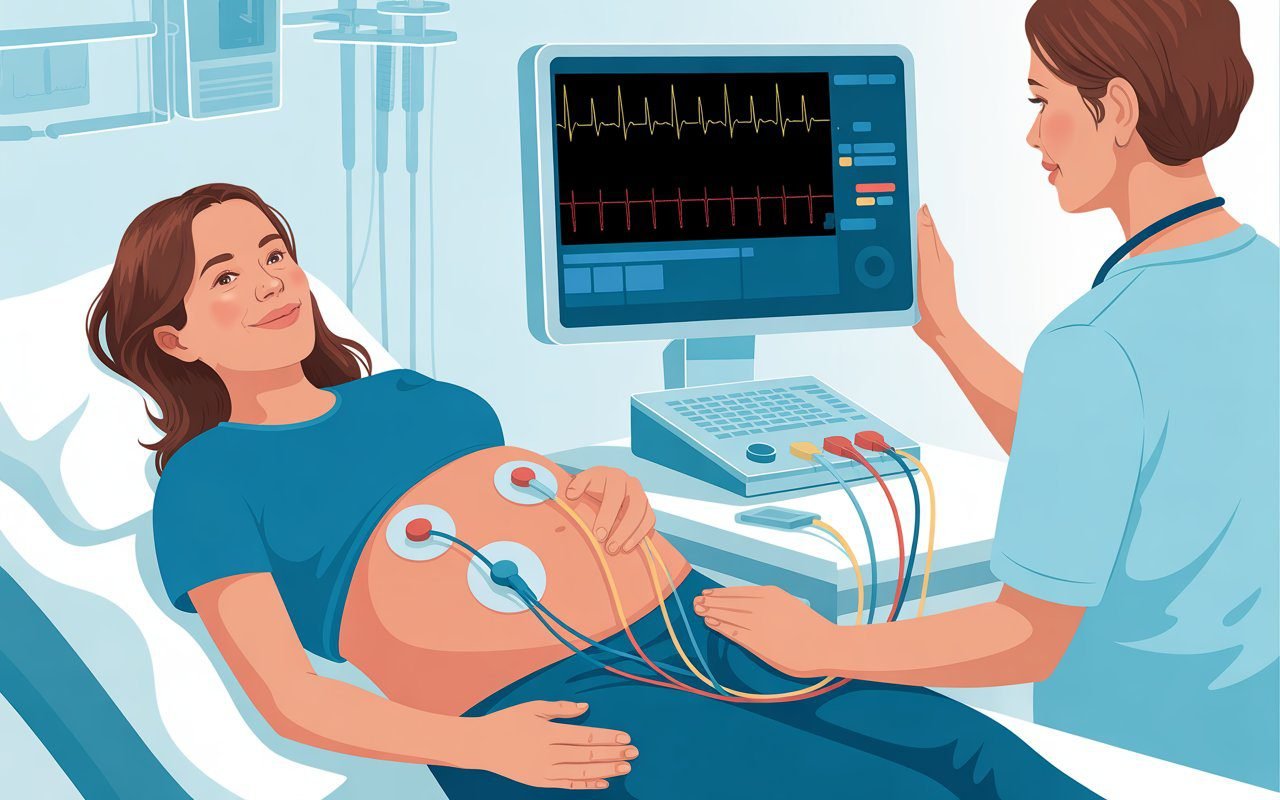
The ECG process is simple and usually very quick. The pregnant woman lies on an exam bed or sits in a semi reclined position. The technician places small adhesive electrodes on the chest and sometimes on the arms and legs. These electrodes have soft pads that rest gently on the skin. They are connected to the ECG machine by thin wires. Once everything is attached, the machine records the heart’s electrical activity for a few seconds.
The woman breathes normally during the test. She does not feel electricity, heat or pain. There is no need to fast beforehand and no need to rest afterwards. After the recording is complete, the electrodes are removed and the mother can continue her usual activities. The doctor then reviews the printed or digital ECG trace to see how the heart rhythm looks. This simple Eletrocardiograma in Pregnancy often gives enough information to decide if the heartbeat is behaving as expected.
When Doctors Recommend ECG During Pregnancy
Not every pregnant woman needs an ECG. Many complete pregnancy with regular prenatal visits only. However, doctors recommend ECG when there are signs that the heart may need a closer look. The goal is early reassurance or early treatment, depending on what the test shows.
Common reasons to request an ECG include:
- Palpitations or a racing heart at rest
- Shortness of breath that feels stronger than usual for pregnancy
- Unexplained dizziness or fainting episodes
- Chest discomfort or tightness
- Irregular pulse felt in the wrist or noticed by the doctor
- History of heart problems before pregnancy
Doctors may also recommend ECG when pregnancy is considered high risk, such as in women with long standing hypertension or known structural heart disease. For an overview of who usually benefits from this type of test, you can see the article on who should ECG.
Is Eletrocardiograma Safe for the Baby
Many pregnant women are afraid that a test could harm the baby. This fear is understandable but in the case of ECG it is not necessary. The machine does not create energy inside the body. It simply reads the signals that the heart naturally produces. No part of the test enters the uterus or touches the fetus. There is no radiation like in an X ray and no magnetic field like in some other imaging tests.
A respected cardiac charity explains clearly that ECG is a very safe test in pregnancy. They emphasize that there are no issues with ECGs and pregnancy and that the test does not involve any radiation or chemicals entering the woman’s body. Many women have ECG because palpitations are common during pregnancy and there is no concern about doing the test. You can read this reassurance in the question and answer page about ECG in pregnancy at ECG pregnant.
What ECG Can Show During Pregnancy
ECG shows how electrical signals move through the heart. The trace allows doctors to see if the rhythm is regular, if the heart is beating too fast or too slow, or if there are extra beats that appear earlier than they should. In pregnancy, some changes in heart rate and ECG shape are normal. For example, a slightly faster resting heart rate can be expected because of increased blood volume and higher metabolic demand.
Clinical studies that examined ECG in healthy pregnant women describe these variations as part of normal physiology. Researchers report that routine antenatal ECG can be safe, practical and even helpful for early detection of serious problems, though most findings are mild and do not require treatment. One such study on electrocardiography in normal pregnancy concludes that antenatal ECG is safe and potentially useful in lowering maternal risk when interpreted carefully. You can see this scientific discussion in an ECG research article at ECG study.
At the same time, ECG can reveal patterns that need attention, such as prolonged intervals, signs of conduction block or frequent premature beats. When these appear, doctors may suggest closer follow up, lifestyle adjustments, or further tests like echocardiogram or Holter monitoring.
ECG Compared to Other Heart Tests in Pregnancy
Eletrocardiograma in Pregnancy is usually the first test done when there is a concern about rhythm. It is fast and gives immediate information. However, it does not show pictures of the heart. If there is a need to look at valve function, chamber size or blood flow, the doctor may recommend an echocardiogram. This is an ultrasound scan of the heart that is also considered safe in pregnancy.
In some cases, a single ECG is not enough because symptoms occur only at certain times of day or during specific activities. When that happens, doctors may recommend a longer recording with a portable monitor that the mother wears for one or more days. Even in these situations, the basic ECG helps guide what type of further investigation is needed and how urgent it is.
High Risk Pregnancy and the Role of ECG
Women with pre existing heart disease, previous heart surgery, congenital heart conditions or long standing hypertension are often followed more closely in pregnancy. For these mothers, periodic ECGs may be part of the care plan. The idea is to watch for small changes before they become large problems. In such pregnancies, the obstetrician and cardiologist usually work together and use the ECG as a shared tool for monitoring.
ECG can also help when pregnancy complications such as preeclampsia develop. Blood pressure spikes and fluid shifts can influence the way the heart works. Having a baseline ECG early in pregnancy and another one later can show whether the heart is coping well with these stressors or whether extra support is needed.
Emotional Benefits of ECG in Pregnancy
Physical safety is only part of the story. Pregnancy is also an emotional journey. When a mother feels that her heart is racing or irregular, it is natural for her to worry. Anxiety can make physical sensations feel even stronger. A normal ECG result can bring a great sense of relief. It shows that the heart is doing its job correctly even if feelings are uncomfortable. This reassurance often improves sleep, appetite and general mood.
Even when ECG shows minor changes that require observation, the mother at least knows that the situation is being watched carefully. That knowledge is powerful. It turns fear into a clear plan. If you are interested in how ECG is used beyond pregnancy, especially in younger age groups, you can read about the test in children and teenagers in the article on children ECG.
Who Benefits Most from Eletrocardiograma in Pregnancy
Eletrocardiograma in Pregnancy is most useful for mothers who have either symptoms or risk factors. Symptoms include palpitations, chest discomfort, breathlessness, or faintness that feel out of proportion to the normal changes of pregnancy. Risk factors include past heart disease, strong family history of heart problems, long term hypertension or certain chronic illnesses that affect circulation.
In women with no symptoms and no risk factors, routine ECG is not always necessary, although some doctors may still suggest it as part of a comprehensive checkup. The decision to order an ECG is based on individual history and clinical judgment. The goal is not to perform as many tests as possible, but to choose the right test for the right person at the right time.
Final Summary
Eletrocardiograma in Pregnancy is a safe and valuable test for both mothers and babies. It records the heart’s natural electrical activity without sending energy into the body. The fetus is not exposed to radiation or chemicals. The test is quick, noninvasive and comfortable. It helps doctors understand whether heart related symptoms are part of normal pregnancy adaptation or signs of a rhythm problem that needs attention.
When results are normal, mothers gain peace of mind. When ECG shows changes, doctors can respond early and plan follow up care. In this way, ECG becomes not just a tracing on paper, but a tool that supports safe pregnancy, informed decisions and confident motherhood.