

terms like “ECG”, “waves”, “electrodes” and “heart rhythm” – but no one explains them in
simple language. This guide is here to fix that. Think of it as a friendly Q&A session
where we answer the most common beginner questions about the Eletrocardiograma, how the
test feels, what the results mean, and when you really need it.Everything here is written in clear, non-technical English, but still based on reliable
medical sources and real clinical practice. It is an educational guide only and does not
replace personal advice from a doctor or cardiologist.
Who This Eletrocardiograma Guide Is For
This eletrocardiograma for beginners article is designed for people who:
- Have never done an ECG test before and feel a bit nervous
- Recently had a test scheduled and want to know what will happen
- Got Eletrocardiograma results but do not fully understand the basic idea
- Are caring for a parent, partner, or child who needs heart testing
If you want a full step-by-step explanation of how the test works, you can later read our
complete beginner guide here:
Eletrocardiograma Test – Complete Guide.
In this article, we will focus more on simple questions and clear answers.
Q1. What Exactly Is an Eletrocardiograma?
An Eletrocardiograma, often called ECG or EKG, is a quick,
painless test that records the electrical activity of your heart. Every heartbeat produces
tiny electrical signals. The Eletrocardiograma machine picks up those signals through small
patches placed on the skin, called electrodes, and turns them into lines and waves on a
screen or paper.
Doctors look at these waves to understand how your heart is working. They can see:
- How fast your heart is beating
- Whether the rhythm is regular or irregular
- Signs of previous or current heart damage
- Possible thickening or enlargement of the heart muscle
For someone just starting out, the important thing to remember is simple: an
eletrocardiograma for beginners is like a snapshot of your heart’s
electrical system. It does not hurt and usually takes only a few minutes.
Q2. Why Do Doctors Order an Eletrocardiograma?
Doctors order this test for many reasons. Some people have clear symptoms, while others
simply have risk factors and need a check-up. You may be sent for an ECG if you have:
- Chest pain, pressure, or tightness
- Shortness of breath that is new or getting worse
- Episodes of dizziness or fainting
- Very fast, slow, or irregular heartbeats
- High blood pressure, diabetes, or high cholesterol
- A strong family history of heart disease
It is also common to have an Eletrocardiograma before surgery, as part of a routine
physical, or when starting certain heart medicines. For beginners, it helps to see this
test as one of the safest and most basic heart checks a doctor can do.
Q3. What Happens During the Test?
Understanding the steps can remove a lot of anxiety. Here is what usually happens in a
standard eletrocardiograma for beginners appointment:
- Preparation: You will be asked to lie on an exam table. A nurse or
technician may ask you to remove your shirt or wear a gown so that your chest is visible.
Shoes and socks may also be removed so electrodes can be placed on your ankles. - Skin cleaning: The technician gently cleans a few small areas on your
chest, arms, and legs. Sometimes a little shaving is needed for better contact. - Electrode placement: Small sticky patches (electrodes) are placed on the
cleaned areas. Wires connect these patches to the ECG machine. - Recording: You will be asked to lie still and breathe normally while the
machine records your heart’s electrical activity. This usually takes less than a minute. - Finished: The electrodes are removed. There is no recovery time – you
can sit up, get dressed, and continue your day.
The whole process, from start to finish, often takes only 5–10 minutes. If you are
wondering about pain, we have a separate, detailed article that answers that question:
Is an Eletrocardiograma Painful? Myths & Facts.
Q4. Does an Eletrocardiograma Hurt or Feel Uncomfortable?
No – the test itself does not hurt. The electrodes only read the electrical signals that
your heart naturally produces; they do not send electricity into your body. You might feel:
- A brief cool sensation when the cleaning gel or alcohol is applied
- Mild pressure when the electrodes are placed on the skin
- A quick, slightly uncomfortable feeling when the stickers are removed
That is usually all. Many people are surprised by how simple and comfortable the
eletrocardiograma for beginners experience actually is.
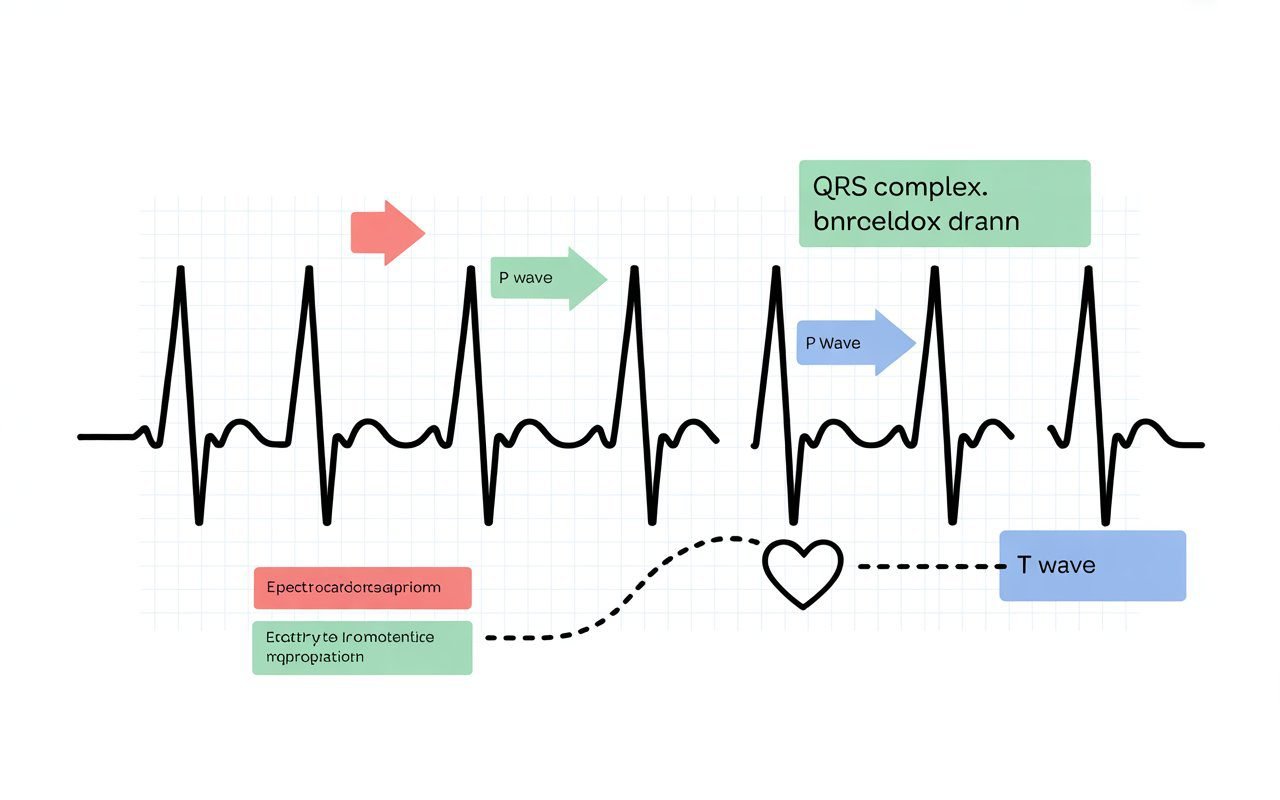
Q5. What Do the Lines and Waves Mean?
On the printed paper or monitor, you will see a series of repeating waves. Even though
they look complex, they are just different parts of one heartbeat:
- P wave – shows the upper chambers of the heart (atria) contracting
- QRS complex – represents the main heartbeat when the lower chambers (ventricles) contract
- T wave – shows the ventricles relaxing and recovering
Doctors are trained to read the height, width, and timing of these waves. From this simple
test, they can identify rhythm problems, previous heart attacks, conduction delays, and
much more.
If you want a deeper explanation of how to read your printout in plain language, check our
article Eletrocardiograma Results Explained.
It is a perfect next step after this eletrocardiograma for beginners guide.
Q6. How Should I Prepare for My First Eletrocardiograma?
In most cases, you do not need special preparation. Still, a few small steps can make your
first eletrocardiograma for beginners experience smoother:
- Wear comfortable clothing that is easy to remove from the upper body.
- Avoid applying lotions, oils, or heavy creams on your chest on the day of the test.
- Bring a list of your medicines; some drugs can influence heart rhythm and may be
relevant for interpretation. - Try to arrive a little early so you are not stressed or out of breath – relaxation helps
produce a clear tracing.
For special cases, like stress tests or Holter monitoring, your doctor may give you extra
instructions. Always follow their advice first.
Q7. Are There Any Risks or Side Effects?
For a standard Eletrocardiograma, serious risks are extremely rare. The test is considered
very safe, even for children, older adults, and people with chronic illnesses. The most
common minor issue is slight skin irritation where the electrodes were placed, especially
if you have sensitive skin or allergies to adhesives.
Remember that the eletrocardiograma for beginners we are describing here
is a non-invasive test. No needles, no radiation, and no injections are used. The ECG
machine only listens to your heart; it does not change how your heart works.
If you want to read a concise medical explanation, you can see this laboratory test
overview from MedlinePlus:
Electrocardiogram (EKG) – Lab Test
.
Q8. Can an Eletrocardiograma Detect All Heart Problems?
This is one of the most important beginner questions. The honest answer is: an
Eletrocardiograma is a powerful tool, but it cannot see everything. It is
excellent for:
- Detecting arrhythmias (irregular heartbeats)
- Showing evidence of a current or previous heart attack
- Revealing certain types of heart enlargement
- Monitoring how heart medicines or pacemakers are working
However, some heart problems only show up under stress, or happen only occasionally. In
those cases, your doctor may suggest:
- A stress Eletrocardiograma while you walk on a treadmill
- A Holter monitor that records for 24–48 hours
- An event monitor that you wear for weeks
- Other imaging tests such as an echocardiogram
Even for beginners, it is helpful to know that one normal ECG does not always rule out
every possible heart problem. That is why doctors look at your symptoms, risk factors,
physical exam, and other tests together – not just the tracing.
If you would like a more technical but reliable patient-friendly page, Cleveland Clinic
offers one:
Electrocardiogram (EKG or ECG) – Cleveland Clinic
.
Q9. When Should I Ask My Doctor About Getting an Eletrocardiograma?
You should contact a health professional urgently if you have:
- Sudden chest pain or pressure, especially if it spreads to arm, jaw, or back
- Shortness of breath at rest or with very small efforts
- Fainting, collapse, or inability to stay conscious
- Very fast or very slow heartbeat together with feeling unwell
In those situations, go to an emergency service rather than waiting for a routine
appointment. An Eletrocardiograma is often the first test done in the emergency room.
For non-urgent questions, talk to your regular doctor if you:
- Have a family history of heart disease
- Live with diabetes, high blood pressure, or high cholesterol
- Are over 40 and have never had your heart checked
- Notice palpitations, skipped beats, or unexplained tiredness
A simple eletrocardiograma for beginners can be a very good starting
point for understanding your heart health.
Q10. What Should I Do After I Get My Results?
When your test is finished, the printout or digital file is sent to a doctor for
interpretation. Sometimes you get feedback immediately; other times you may have to wait
for a follow-up appointment. Here are some easy steps:
- Ask your doctor to explain the results in simple words.
- Write down any terms you do not understand and ask for clarification.
- Find out whether you need more tests, lifestyle changes, or medicines.
- Keep a copy of your ECG if possible, especially if you travel or change doctors.
To truly understand the meaning of normal vs abnormal patterns, move from this
eletrocardiograma for beginners guide to our more detailed article:
Eletrocardiograma Results Explained in Simple Terms.
Key Takeaways for Beginners
Let’s summarise the most important points from this Eletrocardiograma Q&A:
- An Eletrocardiograma is a quick, safe, and painless test of your heart’s electrical activity.
- A standard eletrocardiograma for beginners usually takes less than ten
minutes from start to finish. - It can detect rhythm problems, signs of heart damage, and other important changes – but
no single test can see everything. - Serious risks are extremely rare; minor skin irritation is the most common side effect.
- Always discuss your results and next steps with a qualified health professional.
Use this guide as a starting point, not a final diagnosis. If anything in your body feels
“not right”, or if you have ongoing worries about your heart, speak with a doctor. An
Eletrocardiograma done at the right time can give both you and your
healthcare team valuable information to protect your long-term heart health.