
1. What is an Eletrocardiograma?
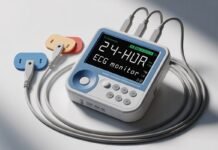
It is a heart test that records the electrical activity of the heart. The results show how signals move through each chamber and if rhythm is normal.
2. Why do doctors request this test?
Doctors use ECG to evaluate rhythm, circulation, oxygen supply and electrical conduction. It helps detect abnormalities quickly even when symptoms are mild.
3. Is the test painful?
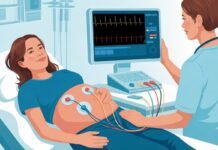
No pain is involved. Electrodes only read electrical signals. They do not pass current into the body.
4. How long does an ECG take?
From start to finish, usually less than 10 minutes. The recording itself takes only seconds once placed.
5. What conditions can ECG detect?
It may show arrhythmias, ischemia, heart attack signs, conduction delay, electrolyte imbalance, chamber enlargement and medication effects.
6. Who should consider doing an ECG?
Anyone with chest pain, palpitations, dizziness, fainting or family heart history may benefit. Full overview available in the complete guide.
7. Can ECG detect heart attack?
Yes, it may show ST elevation, depression or Q wave formation that point to heart muscle injury.
8. Can ECG be wrong?
Yes, if electrodes are misplaced, skin is sweaty, patient moves or filter settings are incorrect. Proper technique reduces mistakes.
9. What preparation is needed?
Avoid lotion, caffeine overload and heavy chest exercise before test. Wear comfortable clothing for easy chest access.
10. Can ECG replace other tests?
No. ECG is powerful but does not measure structure like ultrasound or blood flow like stress evaluation. It is often the first step.
11. What do ECG waves mean?
P wave shows atrial activity, QRS shows ventricular contraction and T wave shows repolarization. Interval lengths also guide interpretation.
12. What does abnormal ECG mean?
Abnormal reading may indicate risk, normal variation or medication influence. Interpretation always matches symptoms and history.
13. How do results appear?
ECG prints as line graphs. Each section reflects conduction duration and heart muscle response. A full explanation is shown in results explained.
14. Is ECG safe for children?
Yes. No radiation and no discomfort. Widely used for pediatric evaluation.
15. Is ECG needed for sports?
Athletes may need screening to check rhythm under effort. High-performance hearts may show changes that need review.
16. Can anxiety affect ECG?
Yes. Stress raises heart rate and may cause rhythm variation. A few minutes of rest improves clarity.
17. Can medication change ECG?
Certain drugs alter QT or PR intervals. Inform your doctor about prescriptions or supplements.
18. Do I need to remove jewelry?
Metal may interfere slightly with conductivity. Removing is recommended for clean waveform quality.
19. Can ECG detect silent heart disease?
Sometimes yes, especially if electrical changes reflect reduced oxygen supply or conduction block even without symptoms.
20. Is ECG enough to say my heart is perfect?
It shows electrical behavior only. Other tests may be needed for valves, muscles or arteries.
21. Does body fat affect tracing?
In some cases yes. Deeper tissue may reduce signal clarity. Skilled placement solves this.
22. How often should ECG be repeated?
Frequency depends on symptoms, age, training level and risk profile.
23. Is ECG better than ultrasound?
Different purpose. ECG checks electricity. Ultrasound checks structure.
24. Can ECG show electrolyte imbalance?
Yes. Low potasssium, calcium or magnesium often reflect as wave distortion or prolongation.
25. Does ECG require hospital visit?
Not always. Many clinics, labs and cardiology centers perform it daily with rapid results. To understand working process fully see how ECG works.
Eletrocardiograma FAQs help patients feel informed rather than overwhelmed. The test is quick, accessible and safe.
General heart health understanding is available through Mayo Clinic at mayo clinic. Public cardiovascular education can also be explored at heart org which offers approachable guidance for everyday users.
Final Summary
This FAQ simplified 25 common questions so patients can approach Eletrocardiograma confidently. It is a simple procedure with high value in early detection. When combined with symptoms, history and lifestyle evaluation, ECG becomes a strong tool for heart protection and decision planning.